
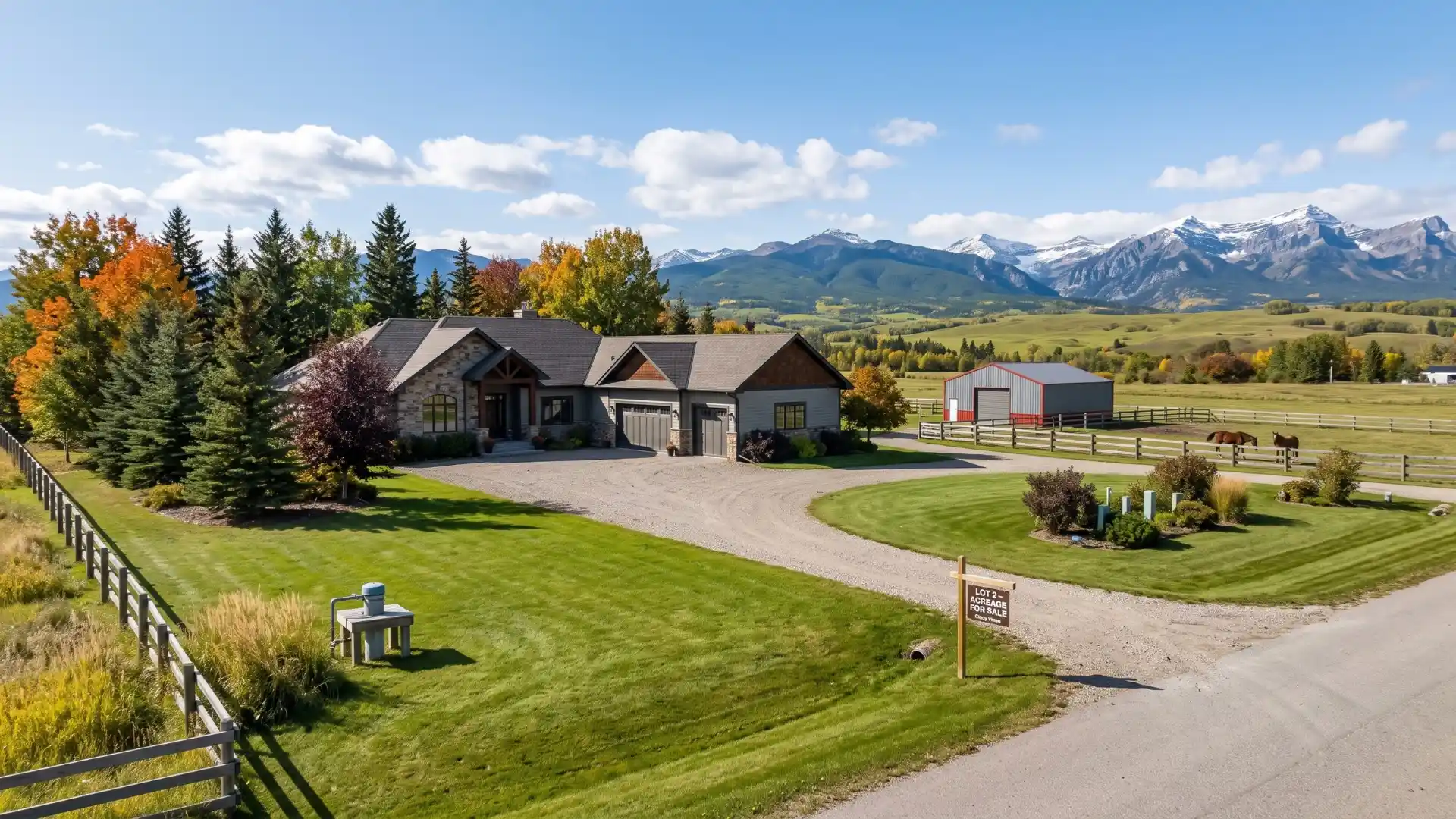
Acreage ownership is one of the most rewarding moves you can make — more space, more privacy, room for animals, and views you just don’t get in town. It’s also a different kind of purchase than buying a house in Okotoks or Calgary. You’re not just buying a home; you’re taking on your own water system, your own sewage treatment, and a different set of zoning rules.
I’ve helped buyers find acreages across Foothills County, Vulcan County, and the towns and rural areas surrounding Okotoks, High River, Nanton, Stavely, and Claresholm. This guide covers what I wish every acreage buyer knew before they wrote an offer.
— Cindy
Water — Where It Comes From and What You’re Responsible For
Unlike a home on municipal services, most acreages get their water from a private well, a cistern, or occasionally a co-op water line. Once you own the property, the water system is entirely yours to maintain.
What to know:
- In Alberta, all water — surface and groundwater — is owned by the provincial government. As a household user drawing water for domestic use (drinking, sanitation, watering a garden or lawn, and livestock), you generally don’t need a water licence, but there’s a cap of 1,250 cubic metres per year for household use under the Water Act.
- If the property has an existing water well, the well usually transfers with the land when you buy — but it’s worth confirming the well’s registration and history with the seller.
- Before closing, get a water potability test done. Most lenders will require this as a condition of financing if the property relies on a well, and it’s simply good practice regardless of financing — you want to know your water is safe to drink before you move in.
- Ask about flow rate, not just water quality. A well that produces water slowly may be fine for one household but could struggle with livestock, irrigation, or a larger family.
- If a well needs to be drilled or altered, that work requires approval and must be done by a licensed driller. This isn’t typically something a buyer does mid-purchase, but it’s useful to know if a property’s water source needs work down the road.
Septic Systems — The Part Most City Buyers Don’t Think About
Almost every acreage in southern Alberta runs on a private septic system rather than municipal sewer. This is the single most common source of “surprise” costs for new acreage owners.
What to know:
- Alberta’s septic rules are governed by the Private Sewage Systems Standard of Practice (2021), enforced under the Safety Codes Act. Any new installation, alteration, or repair requires a permit and must be done by a contractor holding a valid Private Sewage Certificate.
- Setback distances are specific and enforced: septic tanks generally need to be at least 3 metres from buildings and 1.5 metres from property lines; drainage/treatment fields need roughly 5 metres from buildings and 3 metres from property lines; and wells need to be kept well clear of septic components — commonly 30+ metres from the tank and significantly farther from the treatment field, depending on the system type. Exact numbers can vary, so always confirm setbacks with your county before relying on them.
- A standard home inspector is generally not qualified to evaluate a septic system. If you’re serious about a property, it’s worth arranging a separate septic-specific inspection (roughly $300–$500) during your conditions period.
- Never waive a septic inspection condition on an acreage purchase. A well-maintained system can last 30–40 years; a neglected one can cost $15,000–$50,000+ to replace, depending on the system type and site conditions.
- Septic tanks typically need to be pumped every 3–5 years, depending on tank size and household usage. Ask the seller for pump-out records — if they don’t have any, that’s worth factoring into your offer.
- Many older systems were built under earlier standards. A system that was compliant when installed isn’t automatically required to be upgraded, but if you’re planning renovations or an addition, it may need to meet current code.
Zoning — Know What You’re Actually Allowed to Do With the Land
This is the part that surprises buyers most: what you can build, raise, or run on a property depends entirely on its zoning, and zoning varies by county.
Common zoning categories in our area (using Foothills County as an example):
- Country Residential (CR) — the most common “traditional acreage” zoning. Typically smaller parcels (often under ~10 acres) intended for residential use rather than active farming.
- Agricultural District — larger parcels, generally minimum 8 hectares (about 20 acres) and up, intended primarily for farming. Financing an agricultural-zoned property as a residential buyer is more limited (more on this in the financing section below).
- Cluster Residential — smaller-footprint developments grouped together to reduce overall land disturbance, often paired with a larger remnant agricultural parcel.
A few zoning specifics worth knowing before you fall in love with a property:
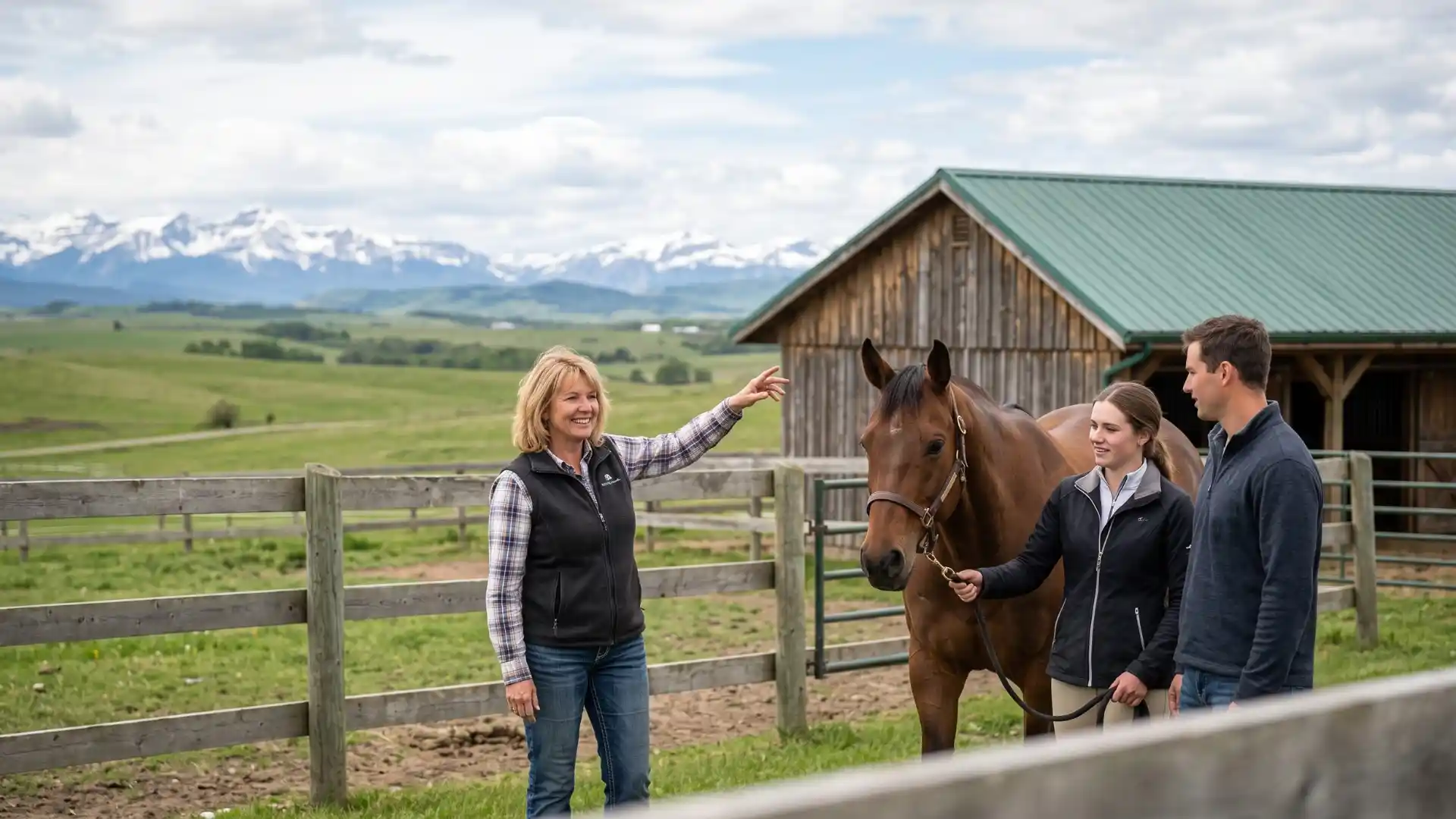
- In Foothills County, properties under 3 acres are typically not permitted to keep livestock without a discretionary use approval, which is rarely granted. If having horses or other animals is part of your plan, 3 acres is generally the realistic starting point, and even then, the number of animals allowed is tied to your zoning and acreage — commonly calculated using an “animal unit” formula.
- Maximum lot coverage, building height limits, and setback requirements all vary by zoning district and even by location within the county (setbacks near highways, for example, are often larger).
- If a property has existing structures that don’t match current zoning — a riding arena that was never permitted, for instance — that’s something to flag clearly during your due diligence, since it can affect financing, insurance, and future resale.
- Zoning rules differ by county. A property near Okotoks or High River falls under Foothills County’s Land Use Bylaw, while something near Nanton, Stavely, or Vulcan may fall under a different county or municipal district with its own rules. Always confirm zoning directly with the relevant county office — I can help point you in the right direction for whichever area you’re considering.
Financing an Acreage — Why It’s Not the Same as a City Mortgage
This is the step that catches the most buyers off guard. Acreage financing follows different rules than a typical residential mortgage in town, and not every lender offers it.
What to know:
- Most residential lenders will only lend against the value of the house, a garage, and up to about 10 acres of land — even if the property is larger. Extra acreage and outbuildings (shops, barns, arenas) often need to be paid for out of pocket, separate from the mortgaged portion.
- Minimum down payment generally follows standard rules — 5% on the first $500,000 and 10% on the portion between $500,000–$1,000,000 — but lenders often require more for rural properties, and the down payment requirement can increase the farther a property is from a population centre.
- If the property is zoned agricultural or you intend to farm/raise animals for income, conventional residential lenders typically won’t finance it — you’d be looking at agricultural lenders like Farm Credit Canada instead, which is a different process with different requirements.
- Vacant land or raw land (no home on it yet) is harder to finance than a property with an existing house — expect a larger down payment (often 25–50%) and a smaller pool of lenders, unless you’re financing land and a new construction build together.
- Lenders will commonly require a water potability test and may require a septic inspection as conditions of approval — not just good practice, but often a hard requirement.
- Appraisals for rural properties typically cost more ($400–$650+ vs. standard town appraisals) and can take longer, since comparable rural sales are harder to find.
- Not all lenders are equally comfortable with acreage properties. A mortgage broker who works regularly with rural Alberta properties can save you significant time and frustration compared to a standard bank branch that may rarely handle acreage files.
- There is no land transfer tax in Alberta, which applies whether you’re buying in town or in the country. GST may apply if you’re purchasing from a builder or in some cases from a farmer — always confirm whether GST is included in the negotiated price.
Where to Look — Acreage Areas Around Southern Alberta
The right area depends on your goals, your budget, and how far you’re willing to be from city amenities.
- Foothills County (around Okotoks and High River) — the most convenient option for buyers who still want reasonably close access to Calgary. Highest demand, and often the highest price point of the areas listed here.
- Around Nanton and Stavely — generally more affordable than Foothills County, with a slower pace and strong small-town character.
- Vulcan County — excellent value for larger parcels, with a strong agricultural community.
- Around Claresholm — a good option for buyers prioritizing land size and budget over proximity to Calgary.
“Many excellent acreage opportunities can be found around Okotoks, Foothills County, High River, Nanton, Stavely, Claresholm, and Vulcan County. The best area depends on a buyer’s goals, budget, and desired proximity to city amenities.” — Cindy Pineo
Common Mistakes Acreage Buyers Make
Based on real conversations with buyers, here’s what tends to catch people off guard:
- Waiving the septic or water inspection to make an offer more competitive. This is the single riskiest thing an acreage buyer can do. A failed system discovered after closing is a five-figure problem.
- Assuming the mortgage covers the whole property. If you’re buying 20 acres but the lender only values 10, you need to know that before you’re at the lawyer’s office.
- Not budgeting for snow removal, road maintenance, and general upkeep. There’s no city crew coming to plow your driveway.
- Not checking zoning before planning for animals, a shop, or a secondary suite. What the previous owner did isn’t necessarily what you’re allowed to do.
- Assuming all acreages near each other follow the same rules. Zoning, setbacks, and even septic standards can differ by county — a property 10 minutes apart might fall under entirely different rules.
FAQ
Do I need a special inspection for an acreage, beyond a regular home inspection? Yes. A standard home inspector typically isn’t qualified to evaluate a septic system, and most don’t test well water either. Plan for a separate septic inspection and a water potability test as part of your due diligence.
Can I keep horses or other animals on any acreage? Not automatically — it depends on zoning and lot size. In Foothills County, for example, properties under roughly 3 acres typically cannot keep livestock without special approval, which is rarely granted. Always confirm what’s allowed on a specific property before assuming.
Is it harder to get a mortgage for an acreage than a house in town? It can be more involved, though not impossible. Lenders often limit financing to the house, garage, and roughly 10 acres of land, may require a larger down payment depending on size and location, and will likely require water and septic conditions. Working with a mortgage broker experienced in rural Alberta financing makes the process smoother.
What’s the difference between Country Residential and Agricultural zoning? Country Residential is typically smaller-parcel zoning intended for residential acreage living. Agricultural zoning is generally larger-parcel and intended for farming use, which also affects how the property can be financed.
How often does a septic system need to be pumped? Roughly every 3–5 years for most residential systems, depending on tank size and household usage. Ask for the seller’s pump-out records before you buy.
Do all these rules apply the same way in every county around southern Alberta? No — this is one of the most important things to understand. Zoning bylaws, setback requirements, and permitting processes are set at the county or municipal level, so rules can differ between Foothills County, Vulcan County, and others. I can help you understand what applies to a specific property you’re considering.
Thinking About Making the Move to Acreage Living?
Acreage buying has more moving parts than a typical home purchase, but you don’t have to figure it out alone. I’ve helped buyers across Foothills County, Vulcan County, and the towns of Okotoks, High River, Nanton, Stavely, and Claresholm find the right rural property — and avoid the costly surprises.
More acreage guides
- Foothills County Acreage Living Guide
- Well Water 101: What Every Foothills Acreage Buyer Should Know
- Equestrian Properties in Southern Alberta
Disclaimer
This guide is provided for general informational purposes. Zoning bylaws, building and safety codes, and mortgage lending requirements vary by municipality and lender, and can change. Always verify current requirements with the relevant county office, a licensed mortgage professional, and qualified inspectors before making decisions about a specific property.