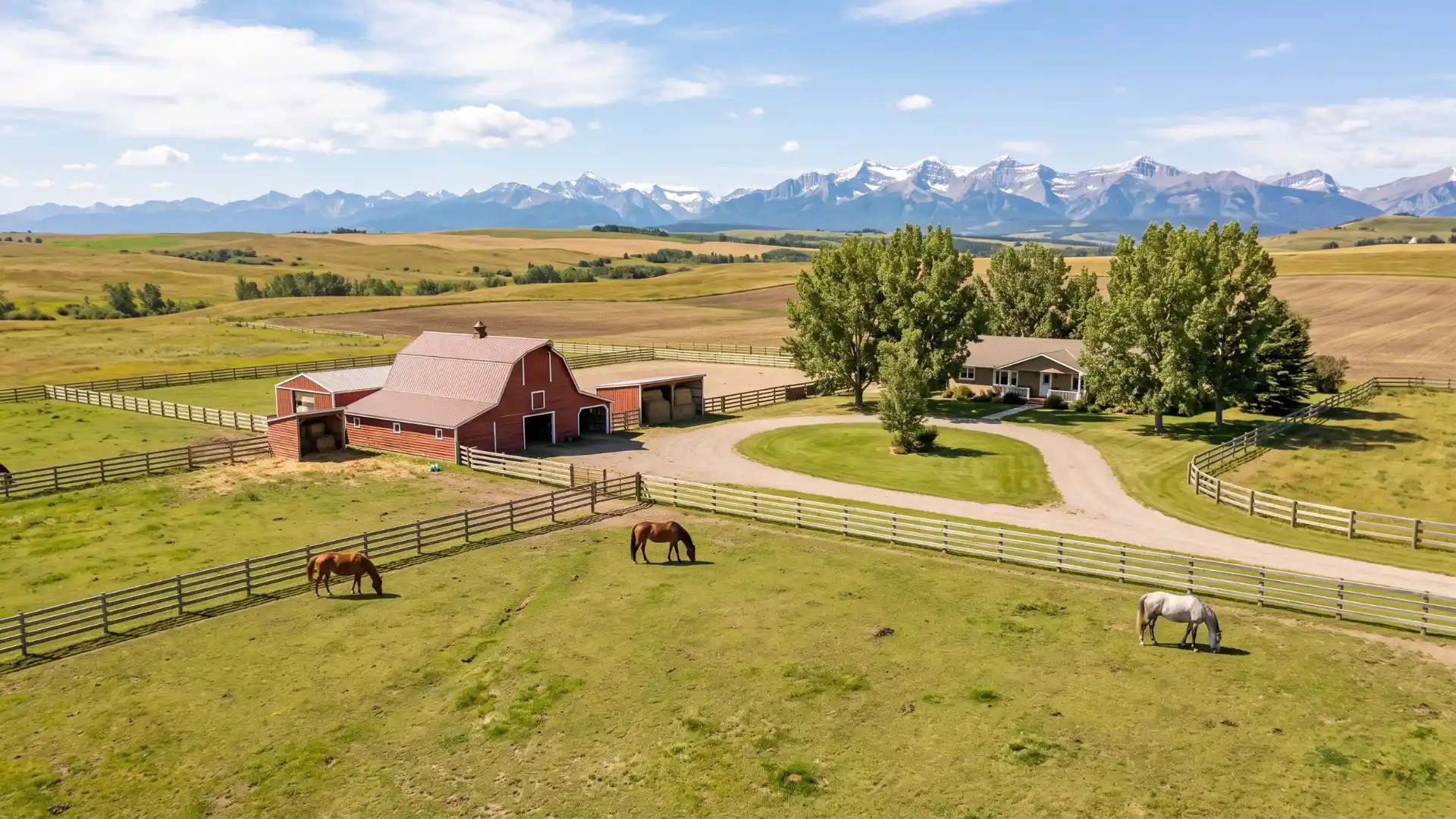

If you're looking at an acreage anywhere from Okotoks to Nanton, Vulcan to Claresholm, you've probably already had this thought: what happens when there's no city water line running to the property?
It's one of the first questions I get from acreage buyers, and honestly, it should be. Water is the thing that makes a property livable — and on an acreage, you're responsible for your own supply. That's not a reason to be scared off. It just means going in informed, so nothing catches you off guard after you've already fallen for the view.
Here's what I walk every acreage client through before they write an offer.
How a well actually works
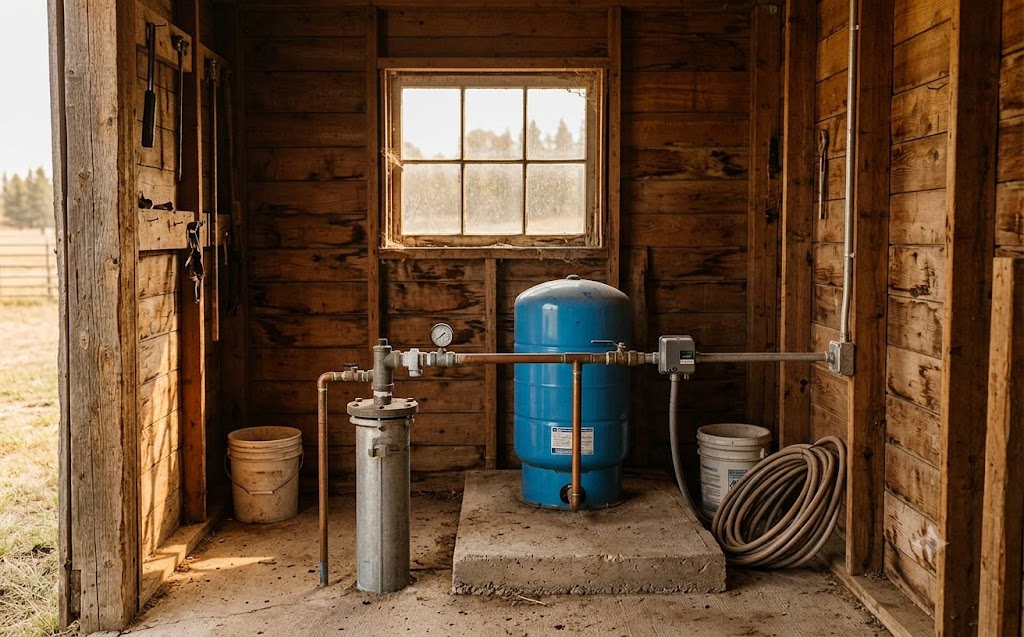
Most acreages in Foothills County and the surrounding area draw water from a drilled well, typically ranging anywhere from 50 to 400 feet deep depending on the local geology and where the water table sits. The well pumps water up into a pressure tank — usually in the house or a nearby outbuilding — which then feeds your regular plumbing, just like municipal water would.
Depth doesn't automatically mean better or worse water. What matters more is flow rate (how much water the well can produce) and water quality, which is exactly what testing is for.
Testing isn't optional — it's part of the deal
This is the part I want every buyer to hear clearly: your lender will require it, and you should want it regardless.
Health Canada's drinking water guidelines call for private well owners to test for bacteria at least once a year, and recommend testing twice a year where possible, since risk shifts with the seasons — spring thaw and after heavy rain are higher-risk windows. The standard is total coliform and E. coli testing, and the acceptable result is simple: none detected. If a test comes back positive, it needs to be reanalyzed and resampled before you'd want to trust that water for drinking.
Beyond the annual bacterial check, buyers should also do a more complete panel — minerals, hardness, nitrates — at the time of purchase, since that's your one chance to know exactly what you're inheriting before it's yours.
Practically, here's how it plays out in a purchase:
- Your offer should include a water condition, requiring the seller to prove the well produces potable water
- Your lender will want to see clean bacterial test results before approving financing
- I'll help coordinate the testing and make sure the paperwork lines up with your lender's timeline
- Ask for well records if the current owner has them — depth, age, any past issues, past test results
What it actually costs
Buyers are often surprised that owning a well isn't "free water forever." Realistic numbers to budget for:
- Initial testing: roughly $200–$400
- Treatment systems (if needed — iron, hardness, etc.): $2,000–$5,000
- Annual maintenance and testing: $300–$500 per year
Not every well needs treatment. Plenty of wells in this area produce excellent water with nothing more than the bacterial check. But you won't know which category you're in until you test — so budget for the possibility, and be pleasantly surprised if you don't need it.
Questions I'd want answered before you fall in love with the property
- How deep is the well, and how old is it?
- What's the flow rate — has it ever run dry or run low in late summer?
- Are there past water test results available?
- Has the current owner installed any treatment system, and why?
- Is there a backup water source (cistern, second well) if anything happens to the primary?
None of these are dealbreaker questions by default — they're just the questions that let us negotiate from a place of knowledge instead of finding out the hard way in August.
The bottom line
A well isn't a red flag. It's just a different system than what most buyers are used to, and one that rewards a little homework upfront. If you're looking at acreage property and want to understand exactly what you'd be taking on — water, septic, zoning, all of it — that's the conversation I have with every acreage client before we ever write an offer.
Curious what acreage ownership actually costs where you're looking? Use the Acreage & Rural Property Cost Calculator to get a realistic picture, or reach out and I'll walk you through it — no pressure, just guidance.