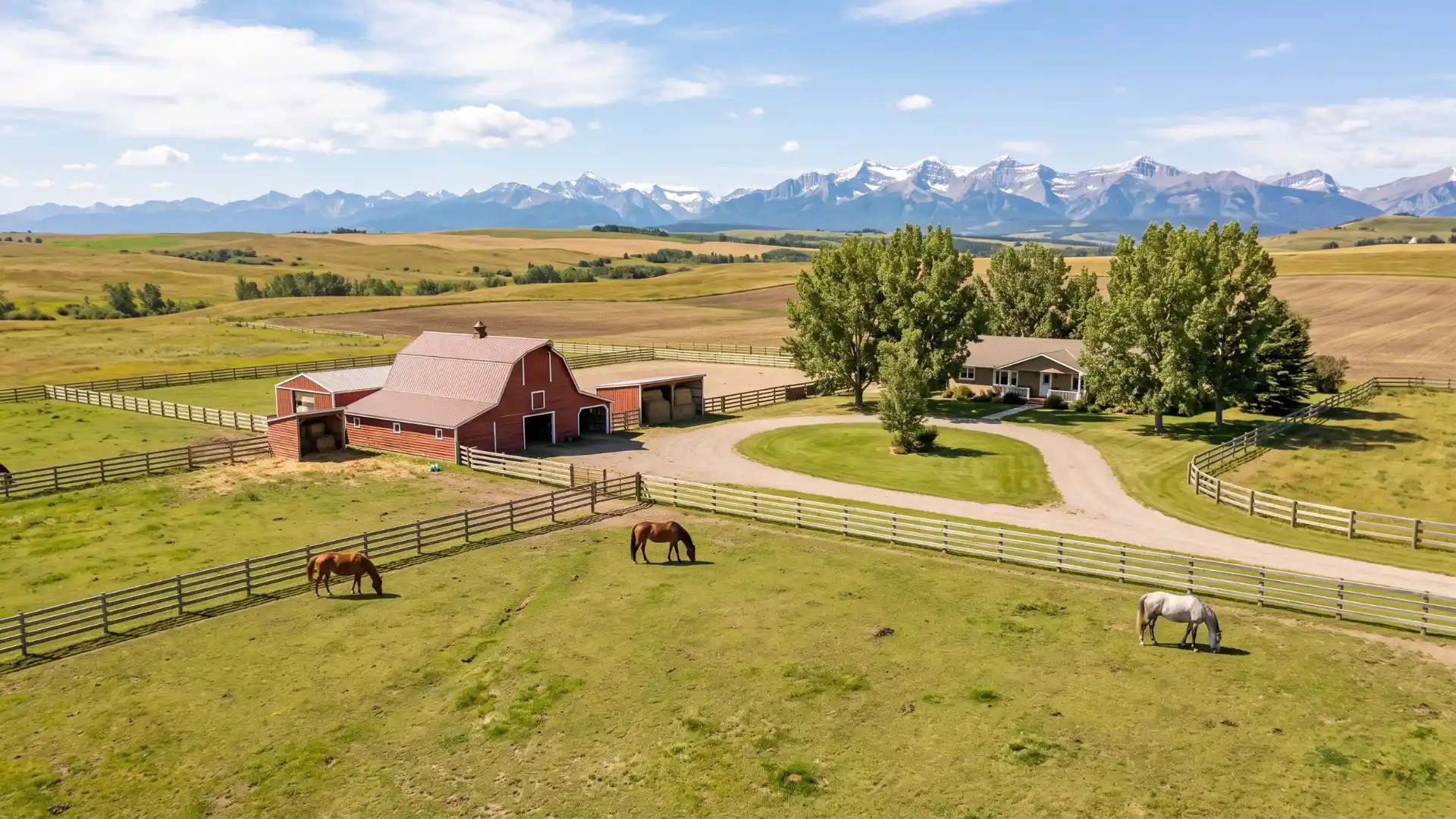

If you’re looking at an acreage anywhere from Okotoks to Nanton, Vulcan to Claresholm, there’s a good chance the home isn’t hooked up to a town sewer line. Your waste goes into a private system on the property, and from the day you take possession, it’s yours to maintain.
That sounds scarier than it is. A septic system isn’t a red flag. It’s just a different kind of system than most city buyers are used to. The goal is to know which one you’re buying, what it was built for, and whether the paperwork matches what’s in the ground.
I covered septic briefly in my complete guide to buying an acreage in Southern Alberta, including setbacks, inspection costs and pump-out schedules. This post goes deeper on the things I want my buyers to understand before they write an offer. If you read my Well Water 101 post, think of this as its companion.
Not all septic systems are the same
“Septic” gets used as a catch-all, but Alberta’s farmstead guidance describes several different setups.¹ The ones you’re most likely to run into:
- Septic tank and disposal field. Solids settle in the tank, and the liquid flows out into soil trenches where natural bacteria finish the job.
- Treatment mound. A raised bed of sand, used where the soil, water table or bedrock won’t allow a conventional field.
- Packaged sewage treatment plant. Think of it as a high-tech tank that adds air to treat the wastewater to a higher standard than a standard tank.
- Holding tank. A sealed tank with no field at all. It stores sewage until a truck hauls it away.
- Sewage lagoon. A lined, shallow pond that treats effluent through evaporation and natural processes.
Two others you want to ask about by name: open discharge, where effluent is released onto the ground surface and must stay on the property, and cesspools, older underground pits that are no longer permitted to be built.¹
Why does it matter? A holding tank means ongoing hauling costs. A packaged plant has mechanical parts. A mound or field depends on the soil. Each one changes what your ownership looks like.
The rules: who’s allowed to install what
In Alberta, private sewage systems are built to the Alberta Private Sewage Systems Standard of Practice. The 2021 edition is the current one, adopted under the province’s Safety Codes framework.² A permit is required to install a new system, replace an existing treatment system, or change a system’s design.³ Contractors must hold the right provincial certification to pull those permits.²
Your county is the one who issues permits and sets local requirements, so check with them directly. The Foothills County office is at 403-652-2341.
The question most buyers don’t ask: what was it built for?
This is the one I’d put at the top of your list. A septic system is designed around the house it was permitted for: the number of bedrooms, the water fixtures, the expected peak use.³ If the previous owners finished a basement, added bedrooms or put on an addition, the system may no longer match the house. Altering a system’s design, for example to handle higher peak flows after a renovation, needs a permit.³
So don’t just ask, “Is there a septic system?” Ask:
- What type is it, and how old?
- Is there a permit on file, and does the number of bedrooms on the permit match the house today?
- Where are the tank and field, and are they marked on the property?
- Have there been repairs or upgrades? By whom, and with what permits?
- Can I see the pump-out records?
If the answers are “we’re not sure,” that’s information too, and it belongs in your negotiation.
Get it inspected the right way
A regular home inspector isn’t there to evaluate what’s buried in the ground. Arrange a separate septic inspection during your conditions period, and book it early so it fits inside that window. Make sure the inspection is done by a qualified septic professional, and if the system is due for a pump-out, ask who pays for it before you finalize the conditions.
Whatever you do, don’t waive the septic condition to make your offer more competitive. I’ll talk you through the trade-offs, but this is one I’d never skip.
What not to send down the drain
Once you own the system, your habits matter. Alberta’s farmstead guidance flags a few things that can harm a system:¹
- Grease and oils can plug it. Scrape greasy dishes first.
- Water softener and iron filter backwash can overload the system or harm the bacteria and soil it relies on.
- Garburators add solids and organic load. If you plan to use one, the guidance recommends a larger tank and treatment.
If the home you’re buying has a water softener or iron filter, ask where that backwash drains.
Red flags worth pausing on
- No permit or records for the system
- A cesspool or open discharge setup
- Extra bedrooms or a major renovation with no permit
- A field in low, poorly drained ground (poor drainage can saturate the soil and cause early field failure)⁴
- A seller who can’t tell you the system type or last pump-out
None of these automatically kills a deal. They do change what you offer and what you need the seller to fix.
The bottom line
Septic isn’t a reason to avoid acreage living. It’s a reason to buy with your eyes open. Know the system type, match the paperwork to the house, get the right inspection and plan for maintenance.
Not sure what to ask about a specific property? Use my Acreage & Rural Property Cost Calculator to plan the full cost of ownership, browse my Foothills County Acreage Living Guide, or reach out for a no-pressure conversation. I’m happy to walk through a property with you.
Frequently Asked Questions
What are the main types of septic systems in Alberta? Common types include a septic tank with a disposal field, a treatment mound, a packaged sewage treatment plant, a holding tank and a sewage lagoon. Which one a property has depends on the soil, water table and lot.
Do I need a permit to replace or change a septic system in Alberta? Yes. A permit is required for a new private sewage system, a replacement treatment system, or a change to the system’s design, and installers must hold the right provincial certification. Check with your county for local requirements.
Can I use a regular home inspector for the septic system on an acreage? A standard home inspection doesn’t cover what’s buried in the ground, so arrange a separate septic inspection with a qualified professional during your conditions period.
Disclaimer: This post is general information, not legal, engineering or regulatory advice. Septic rules and permit requirements are set provincially and applied locally, so confirm details for any specific property with Foothills County (or the relevant municipality), a certified septic professional and your real estate lawyer.
Thinking about your first home? Reach out for a no-pressure conversation. → Contact Cindy