
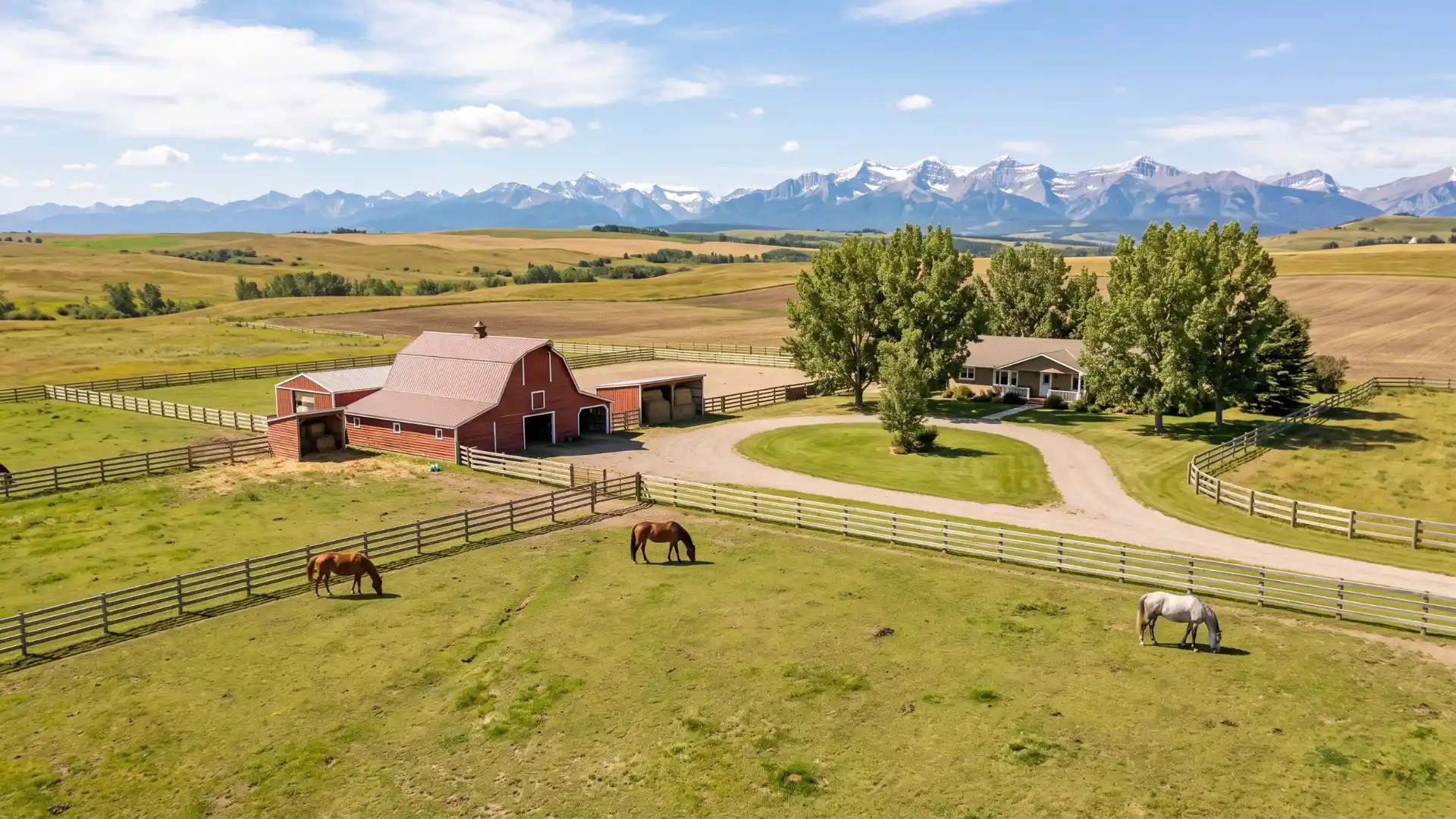
Whether you’re looking for a quiet hobby farm with room for two horses or a property set up for boarding and training, equestrian real estate comes with its own set of questions — how much land you actually need, what your zoning allows, and what infrastructure is already in place versus what you’ll need to build.
I’ve helped buyers find equestrian and hobby farm properties across Foothills County, Vulcan County, and the towns and rural areas around Okotoks, High River, Nanton, Stavely, and Claresholm. Here’s what to know before you start looking.
— Cindy
How Many Horses Can You Actually Keep?
This is the first question almost every equestrian buyer has, and the honest answer is: it depends on your zoning and your acreage — not just how much land “feels” like enough.
In Foothills County specifically, the rules are laid out clearly in the Land Use Bylaw:
- Livestock (including horses) cannot be kept on parcels under 3 acres at all, under standard zoning.
- On parcels between 3 and 9 acres, you’re permitted up to 3 animal units without a development permit.
- On parcels over 9 acres, the allowance works out to roughly 1 animal unit per 3 acres without a permit.
- Want more than that? You can apply for a Development Permit to keep additional animals, but you’ll need to demonstrate adequate facilities, water supply, and manure management.
What counts as one “animal unit”? Per Foothills County’s official conversion table:
- 1 horse (1 year or older) = 1 animal unit
- 1 mare with foal = 1 animal unit
- A weanling = 2 animal units (i.e., 2 weanlings per animal unit)
- A miniature horse = 4 animal units (i.e., 4 minis per animal unit)
- A donkey = 2 animal units; a mule = 1 animal unit
In practice, here’s roughly what that means in Foothills County:
| Parcel Size | Horses Permitted (without a permit) |
|---|---|
| Under 3 acres | None |
| 3–9 acres | Up to 3 |
| 10 acres | Approximately 3 |
| 20 acres | Approximately 6–7 |
| 30 acres | Approximately 10 |
This table reflects Foothills County’s published bylaw figures as a general guide. Other counties (Vulcan County, Willow Creek, etc.) use their own animal unit systems, which may differ. Always confirm the specific bylaw for the county a property sits in before assuming these numbers apply.
Beyond the permitted count: if you’re planning a commercial operation — boarding other people’s horses, running a training business, or offering lessons to the public — that requires a Development Permit regardless of acreage, since it falls under a different use category than personal hobby ownership.
Land, Water, and Shelter — What Horses Actually Need
Zoning tells you what’s allowed. Good horsekeeping is a separate question.
Pasture and turnout space A commonly cited general guideline is 1–2 acres of usable pasture per horse, though the right number depends heavily on pasture quality, how much turnout time the horses get, and whether you’re rotating grazing areas. Herd dynamics matter too — horses that don’t get along need separation options, which can mean more fencing and more total space than the math alone suggests.
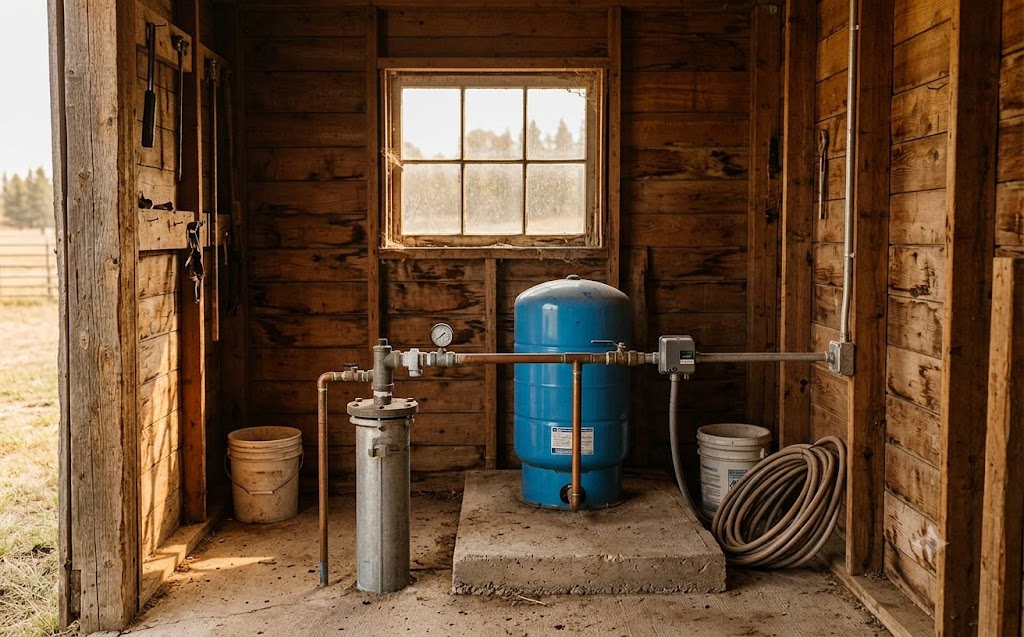
Water Horses drink a lot, especially in summer, and a property’s well needs to keep up — not just for the house, but for barn use, wash bays, and winter heated waterers. If you’re seriously considering a property for horses, ask about the well’s flow rate specifically, not just whether the water tested safe.
Winter shelter Alberta winters are no joke for horse owners. At minimum, horses need protection from wind, precipitation, and extreme cold — typically a three-sided run-in shelter at minimum, though most owners in this climate prefer a proper barn with individual stalls, good ventilation, and heated water systems to prevent freezing.
Fencing Safe, horse-rated fencing is a real budget line item, not an afterthought — and a property with poor or unsafe existing fencing should factor into your offer.
Buildings — Barns and Arenas
If a property already has a barn, arena, or other equestrian structure, two questions matter before you rely on it:
- Was it permitted? Structures built without the proper development and building permits can become your problem after closing — ask the seller for permit documentation, and verify directly with the county if anything seems unclear.
- Does it meet current setback and lot coverage rules? Even a permitted structure built years ago may not meet current bylaw requirements if rules have since changed — this is part of why a pre-purchase compliance check is worth doing on any property with significant outbuildings.
If you’re planning to build new:
- Both a development permit (land use, setbacks, how the building fits the area) and a building permit (structural safety) are typically required, often as separate applications even if submitted around the same time.
- Lot coverage limits (commonly capped around 60% of the parcel in Foothills County’s relevant districts) apply cumulatively — your house, existing barn, shop, and a new arena all count toward the same limit.
- Indoor arenas are a major investment. Costs vary widely based on size and finishing, so get quotes specific to your plans rather than relying on rough averages from other regions.
Where to Look
Different parts of southern Alberta suit different equestrian goals:
- Priddis & Millarville — strong, long-established equestrian culture, with trail access and a community built around horse ownership. Generally commands premium pricing.
- High River area — deep ranching and western heritage, often more acreage for the price compared to areas closer to Calgary.
- Turner Valley & Black Diamond — close to Sheep River Provincial Park’s trail network, appealing for trail riders specifically.
- Vulcan County, Nanton, and Stavely — generally more land for the price, with a quieter, more agricultural character.
The right fit depends on your priorities: trail access, proximity to other equestrian facilities and vets, commute to Calgary, or simply land size and budget.
Common Mistakes Equestrian Buyers Make
- Falling in love with a property before checking the zoning math. A gorgeous 5-acre parcel might legally support fewer horses than you’re planning to bring.
- Assuming an existing barn or arena is permitted. Always ask, and verify if it matters to your decision.
- Underestimating well capacity needs. A well that’s fine for a household can struggle once you add barn use, wash bays, and winter waterers.
- Not budgeting separately for fencing and outbuilding repairs. These are often the most underestimated costs in an equestrian purchase.
- Assuming the same rules apply everywhere. Foothills County’s animal unit system doesn’t necessarily match Vulcan County’s or another municipality’s — always check the specific bylaw for where the property sits.
FAQ
How many acres do I need for 2 horses in Foothills County? Under Foothills County’s bylaw, you’d need at least 3 acres to keep livestock at all, and 3–9 acres permits up to 3 animal units without a development permit — so 2 horses would typically fit within that range. Always confirm the specific parcel size and zoning before relying on this.
Can I board other people’s horses on my property? Generally, commercial boarding requires a Development Permit, regardless of how much acreage you have, since it’s treated differently than personal hobby ownership.
Do these rules apply outside Foothills County too? No — this is important. Other counties (Vulcan County, Willow Creek, etc.) set their own animal unit systems and zoning rules. I can help you understand what applies to a specific property you’re considering, wherever it’s located.
What’s the most overlooked cost when buying an equestrian property? Fencing and well capacity are the two most commonly underestimated. A property can look move-in ready and still need significant investment in both.
Closing CTAReady to Find Your Horse Property?
From hobby farms to full equestrian estates, I can help you understand what a specific property actually allows — and what it’ll take to make it work for your horses.
More acreage guides
- Buying an Acreage in Southern Alberta: A Complete Guide
- Foothills County Acreage Living Guide
- Well Water 101: What Every Foothills Acreage Buyer Should Know
Disclaimer
Zoning, animal unit calculations, and permitted livestock counts are based on Foothills County’s published Land Use Bylaw as of this writing and may not apply to properties in other municipalities. Bylaws are subject to change. Always verify current requirements directly with the relevant county before making decisions about a specific property.